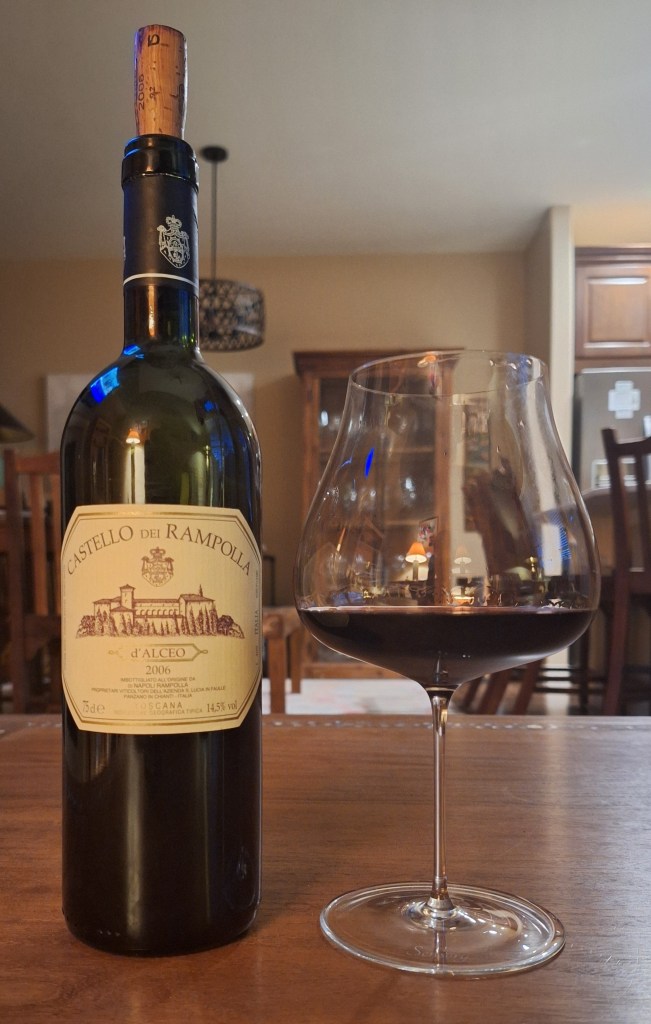
2006 Castello dei Rampolla, Toscana IGT, d’Alceo (RT97) Deep, dark and still hanging on to its brooding hue, this now 19 year-old blend of Cabernet Sauvignon and Petit Verdot is built on a foundation of thunderous masculinity, the structure of the vintage showing off as notes of black currant, scruffy blackberry bramble, blueberry compote, underbrush, cured meat, dried violets and a whiff of Tuscan countryside emerge from the glass. The palate is magnificently crafted and balanced showing exceptionally ripe fruit offset with soft acidity and perfectly ripe tannins. The finish is long, seamless and enduring. This is a truly mesmerizing wine and an icon of Tuscan magnificence, the style leans toward a heftier red with softer acidity than most wines from this region. Serve with hearty dishes! Drink now-2036+ Tasted November 2025
Positioned on the Golden Slopes of Panzano, best known in the native tongue as the Conca d’Oro, is the legendary winery of Castello dei Rampolla. This winery was the dream of a simple farmer: Alceo di Napoli Rampolla, who wished to create a great wine. In 1975 he bottled their first Chianti Classico. Then, with the assistance of the legendary winemaker Giacomo Tachis, Alceo was the first in the area to plant Cabernet Sauvignon and to blend it with Sangiovese. This was the first of Castello dei Rampolla’s exciting innovations, and just a few years, again with Giacomo Tachis’ assistance, launched a blend of 85% Cabernet Sauvignon and 15% Petite Verdot (specific percentages varying from vintage to vintage) and named the wine d’Alceo. This wine spends 3 months in concrete, followed by 12-15 months of additional aging in tonneaux, some toasted, some with no toast. Once bottled, it is aged 18-24 months at the winery before being released into the market. The combination of highly disciplined Biodynamic farming, perfectly ripe fruit and dynamic, artful elevage creates a wine that is nothing short of amazeballs. Nearly impenetrable, brooding and deeply saturated, d’Alceo is produced from terraced vineyards in a modest quantity of 6,000-12,000 bottles per vintage.