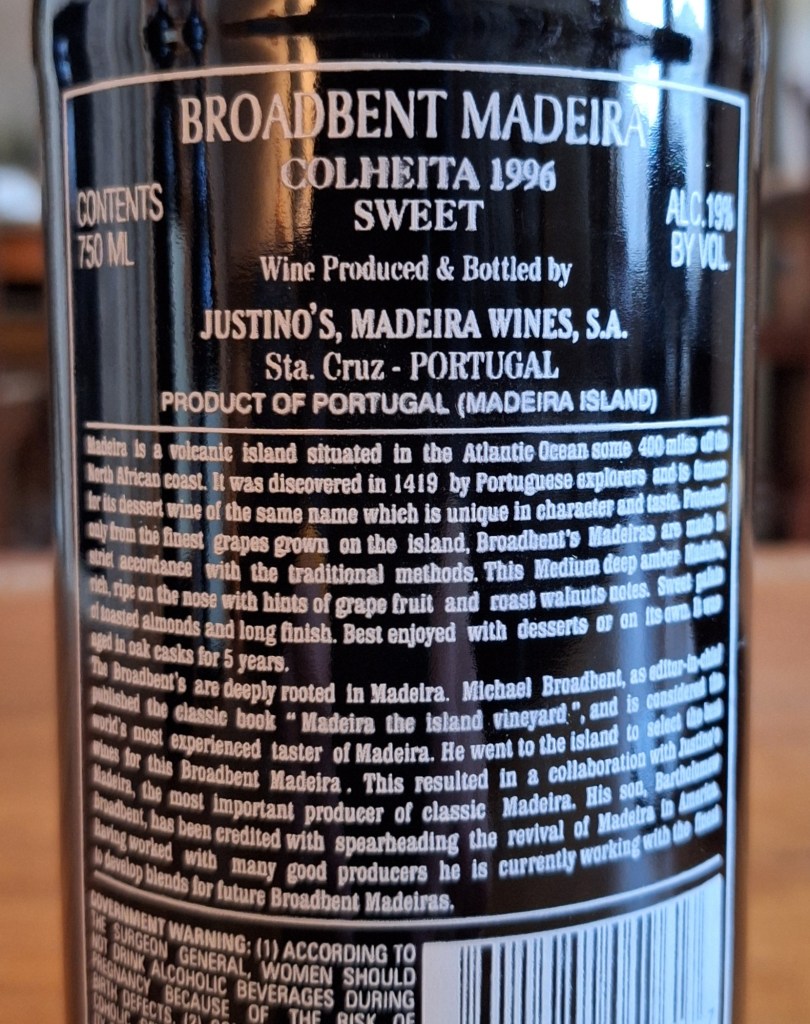
1996 Broadbent, Madeira, Colheita (RT92) The medium caramel hued is crafted from 100% Tinta Negra and reveals the softer, easier going side of Madeira. With its medium-to-deep caramel hue, it wafts up notes of brown sugar, scorched caramel, roasted pecans, orange marmalade, smokey volcanic ash, and hints of sweet spices. The palate is succulent as soft acidity backs up the fruit and leads to a long, juicy mouth-coating finish. This is not quite as vibrant as I prefer my Madeira and could use a bit of additional acidity to keep it fresher on the palate, but it represents an excellent baseline Maderia from the winemakers at Justino’s. Drink now-2040 Tasted April 2025
A few important considerations to understand about the bottling of non-varietal declared Madeira. First, this wine is crafted from 100% Tinta Negra, which is the only red grape variety grown on the Madeira Islands. The balance of them, and there are five different varieties, are white grapes. They are Sercial, Verdelho, Terrantez, Malvasia and Bual. There is also a lessor known red varietal which is bordering on extinction: Bastardo. Production of Bastardo in 2011 and 2012 was miniscule at under 100 liters. You get the point of just how rare it is. Tinta Negra is used for producing sweeter-styled Madeira’s and is the grape contained by the vast majority of Madeira marketed today. Tinta Negra, when bottled on its own, cannot be declared on the label as a grape variety, while in contrast, the others cited above, can be.
This wine, labeled simply “Madeira Colheita”, was produced and bottled by Justino’s and was private labeled for Broadbent by winemakers Juan Teixeira and Flávia Rosário. The islands of Madeira are comprised of volcanic rock and soils, which offer basalt, tufa, scoria and conglomerates. This is a humid area, classified as subtropical and offers varying temperatures, rainfall and humidity determined by the altitude. The vineyards here are mostly terraced with stone wall due to the steep hillsides. The Tinta Negra grapes grown for this bottling are hand harvested beginning in early August and continuing through early October. Grapes are destemmed and gently pressed, the fermentation and maceration takes place in stainless with frequent pump-overs. During fermentation the must is fortified with neutral grape spirits to maintain the desired sweetness degree. Next the wine is aged in American and French oak casks in a traditional Canteiro methode. This method involves stacking the barrels in warehouses and allowing the soft warming of the wine and the impact the casks have on it, to impart the classic caramel taste that typifies Madeira. Once matured it undergoes racking, fining and filtering before the blend is assembled and is finally bottled and shipped to market.