
Diving into the Chianti Classico Region
Looking deeper into the terroir and producer variances within the Chianti Classico region, I recently checked in on a few wines that were pulled from my cellar. I chose wines that were cellared versus new releases because to truly understand the impact of terroir on a wine, one needs to investigate the varied expressions which emerge with cellar time. All of these were acquired on release and stored in my cellar since. Of the four, 2007 Rancia proved the heartiest and held up best, but none of the four were slouches, all displaying the grandeur of Chianti Classico region and its broad variances in both style of producers and expression of terroir.

It was highly engaging to spend time with these stellar wines, which I followed over multiple days. All four come from different parts of Chianti Classico appellation: Cafaggio, which is the most northerly of them and makes its home in Panzano/Conco d’Oro, while Podere Il Palazzino and Castello di Rampolla come from the more centrally positioned Gaiole area. Felsina is produced in the southern portion of the appellation, not far to the north of Siena. The contrast between the four is notable with Cafaggio showing dominant red cherry fruit, Palazzino showing dark cherry and underbrush, Rampolla displaying more expected Sangiovese typicity combined with modern polish, and Felsina revealing a brooding, almost black cherry and forest floor decadence. The differing expressions of terroir was remarkable, they could not have been more different from one another.
2011 Podere Il Palazzino, Chianti Classico, Argenina (RT93) As this wine moves into its 13th year it shows a relatively dark and brooding russet hue. Initially is reveals a bit of a reductive aspect, but once that has resolved (blown off) it shows a deep, brooding bouquet with notes of black cherry, dried black cassis, smokey prosciutto, earth dusted Tuscan brush and hints of campfire charr. The palate is a decided contrast revealing smooth, clean fruit and leads to soft acidic lift and a easy-going round finish. This bottling has matured well within the house style and is in the center of its peak drinking window. I did not decant this and served it directly from bottle, but if you choose this approach use slow, gentle pours. Pairs well with grilled meats, sausages, and hearty tomato based red sauced pasta dishes. Drink now-2030+ Tasted January 2025
This wine continues to be an impressive value in Chianti Classico with current vintages available in the US for under $30 and in some cases (direct import markets) in the lower $20s. In 2019 and coming forward it has been marketed as a Gran Selezione bottling, and at its current price represents one of the most reasonably priced wines of that designation.
Podere Il Palazzino is owned by the Sderci family and since the 1970s, when they first started producing wine, has been managed by Alessandro Sderci and now with his son, Edoardo. Argenina is the name of one of the oldest hamlets in the town of Monti, which is in the municipality of Gaiole, about 10 miles north of Siena. Around the inhabited hamlet, which is now completely restored, the company owns three hectares of vineyards, which are oriented southeast and southwest. The wines that are born from this soil are distinguished by their great harmony, freshness and floral aromas.
Chianti Classico Agenina, which was first produced in 1999, today is 100% Sangiovese and is crafted with handpicked grapes grown in the vineyard’s medium textured tufaceus sandstone soils, which lend enormous depth and masculinity to the wine. The grapes are fermented using indigenous yeasts (natural fermentation) and are then aged for 30 months in used barrique and medium sized botti, and today sits under their Grosso Senesi bottling, which is also a Gran Selezione and is considered their flagship wine. The production of Argenina is around 25,000 bottles with the overall winery production at 80,000 bottles.

2010 Castello di Ama, Chianti Classico Gran Selezione, San Lorenzo (RT95) Coming from the impressively structured 2010 vintage comes the outstanding Gran Selezione San Lorenzo. Low O’d, not decanted and served directly from bottle. Initially this is tightly wound and not giving up much. With time however, it shows Marasca cherry, cranberry, fields of Tuscan grass, scruffy spice and a pinch of brown tobacco. With time in the glass a fine mentholated Tuscan character emerges. The palate is sophisticated and polished with gorgeous, ripe fruit, pinpoint acidity and sweet ripe tannins on the long finish. A fine showing for an impressive bottling, but if you’re considering pulling a cork in the next 5 years, I strongly suggest a short decant. Drink now-2040+ Tasted January 2025
Castello di Ama is an historical winery located about 10 miles north of Siena in the heart of Chianti Classico. Their vineyards are considered some of the very finest in the DOCG and their superb wines bear this out. They have about 75 hectares under vine, around the village of Ama. The vineyards lie between 420 and 527 meters above sea level and extend across four valleys referred to by their traditional names of Bellavista, San Lorenzo, La Casuccia and Montebuoni. The capacity of this winery is rather large with 320,000 bottles produced on average annually, divided between Chianti Classico and IGT labels.
It was purchased in 1972 and produced its cru wines of the same name between 1982 and 1990. It has become the heartland of the Sangiovese used to make Gran Selezione San Lorenzo. This vineyard covers 16.5 hectares (40 acres) and is oriented in an East-Southeast direction. The soils of the vineyard are chalky containing a fair amount of clay-rich schist.
2010 is the inaugural release of the Gran Selezione San Lorenzo bottling. Previous to that from its first vintage in 1982 through 2009 it was designated Chianti Classico Riserva. It is a blend of 80% Sangiovese, 13% Merlot and 7% Malvasia Nera. Vinification is initiated utilizing indigenous yeasts with no inoculation, and each variety is fermented separately in steel tanks at controlled temperature between 30° and 33° C, with manual pumping over and a total cuvaison of 22 days for Sangiovese, 25 days for Merlot and 26 days for Malvasia Nera. Malo takes places in barrique and then the varieties are assembled and aged barrique for 12 months. 22% of which are new for approximately 12 months.

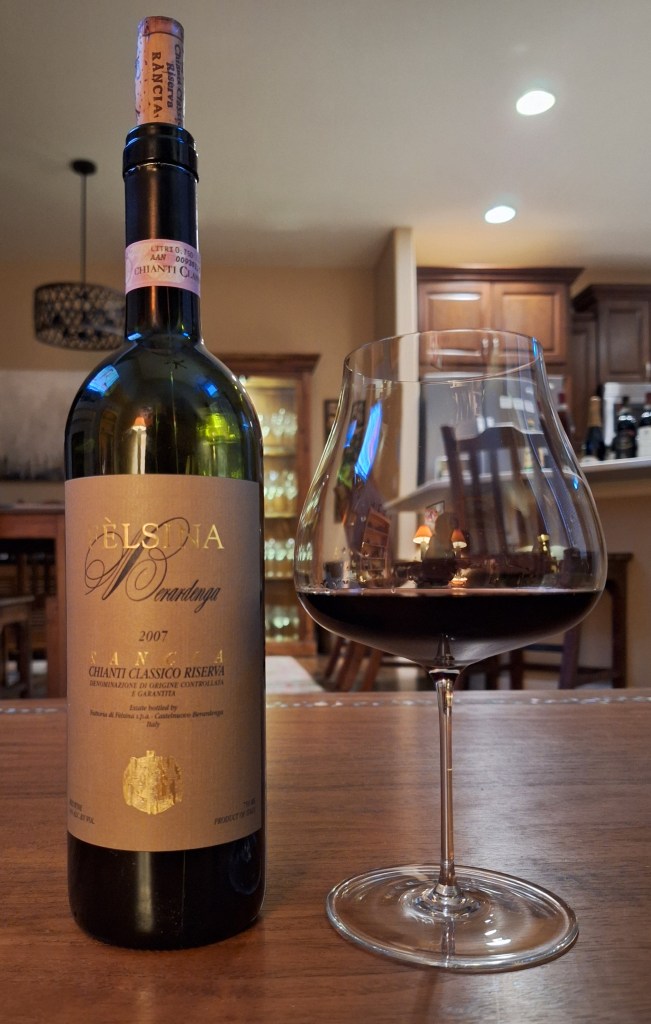
2007 Fèlsina, Chianti Classico Riserva DOCG, Rancia (RT96+) With a deep brooding ruby russet hue, the 2007 Rancia reveals thunderous notes of black cherry liqueur, black plum, dried brambles, dark roast coffee, smoked meat and dusty florals. Built on an impressive wall of structure, the palate delivers sumptuous, sexy and ripe fruit that weighs densely on the mouthfeel, but bright, beautifully integrated acidity and ripe, suave tannins complete a magnificent package. Rancia remains a superstar with a super masculine power curve. This is showing exceptionally well at age 17 and will only get better and more expressive in the next decade. In a word, superb! The first vintage of Rancia shifting from Chianti Classico Riserva to Gran Selezione is 2021. Drink now-2042+ Tasted January 2025
Located in south-eastern Chianti Classico in the municipality of Castelnuovo Berardenga, Fèlsina covers 350 hectares (865 acres) boasting a variety of microclimates, landscapes, terrains and terroirs. They have 130 hectares (321 acres) of vines planted, and in those vineyards, characterized by diverse soils and microclimates, each site expresses unique, individual qualities.
Fèlsina dates to 1960 and they released their first wine – a Chianti Classico – in 1966. First managed and run by Giovanni Poggiali, in 1983 they brought in one of the leading consulting oenologists of the day, Franco Bernabei, to implement a program of mass selection that allowed them to find the very best of the different Sangiovese crus growing on their property. That marriage of grape variety and terroir has proven an inseparable element of both the past and future of Fèlsina. The director of the estate is Giuseppi Mazzocolin, who has a long history with Fèlsina. Their passion is Sangiovese, and they embrace it like holy grail. Also known as Sangioveto – the original Tuscan word – takes its birth from the extraordinary variety of clones that have evolved here due to a combination of variables-different soils and microclimates. These clones constitute a distinctive heritage to hand down to future generations.
The Rancia vineyard takes its name from the historic Rancia farmhouse, once a Benedictine monastery. Located in Castelnuovo Berardenga it has a fine southwest-facing exposure. The soil is composed of limestone-derived alberese classic to the Castelnuovo Berardenga area and of galestro marl in some areas. The more recent plantings utilize genetic material from massal selections gathered from the old Rancia vineyard.
Rancia is, together with Fontalloro – their iconic super Tuscan bottling – were first bottled in 1983. Since then, they have together expressed the vision that Fèlsina has of the Denomination and its Sangiovese passion. Exclusively hand harvested, generally starting in the first weeks of October from the selection of the vineyards of the eighties which were conducted thorough investigations to identify the parent plants most suitable for the construction of grafting and replanting took place in the early 2000s. After the quality-selected clusters are de-stemmed and pressed, the must is fermented and macerated in stainless steel with punchdowns and pumpovers. The wine goes through indigenous fermentation and then is aged for 18-20 months in new French barriques. Afterward the final blend is assembled, bottled, and ages in glass a minimum of 6-8 months. In recent vintages the production of Rancia is rather sizable at 48,000 bottles annually.
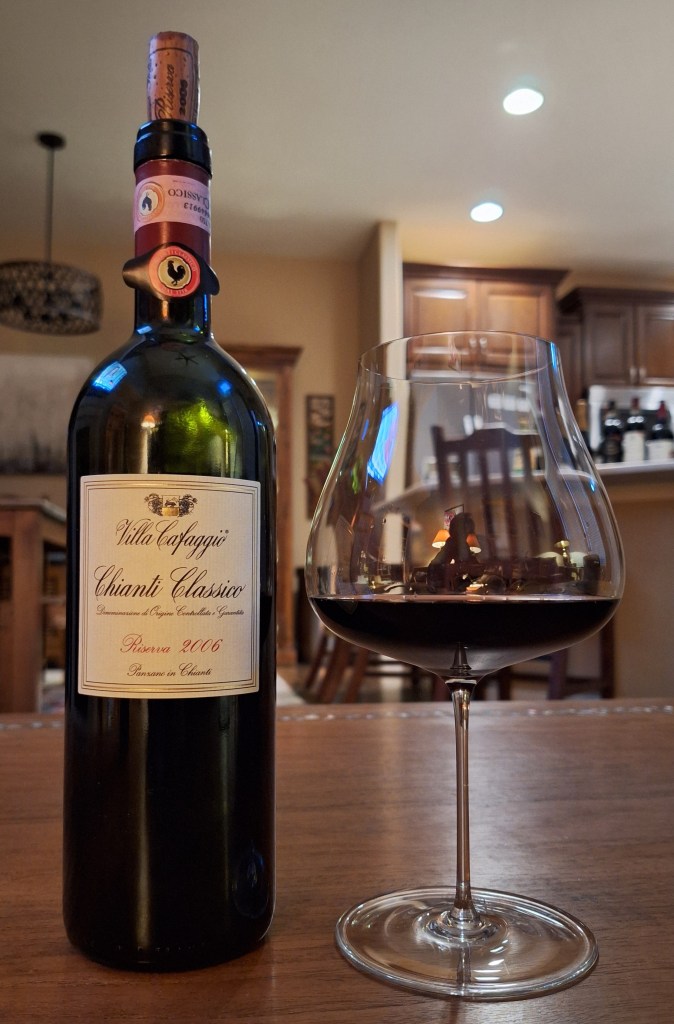
2006 Villa Cafaggio, Chianti Classico Riserva DOCG (RT93) I’ve followed this wine since release, and it’s always been delicious. With its light ruby garnet hue, at age 18 the 2006 Cafaggio CCR wafts up notes of Montgomery red cherry, red currant, green olives hints of sage and Tuscan scruff. The bouquet shows the charismatic evolution of tertiary notes blended with hints of freshness and perfectly ripe fruit. The palate is well integrated and drinking at full peak and expressively showing a bit of modern polish yet well integrated and balanced with ample terroir-driven Sangiovese fruit, fresh acidity and ripe, suave soft tannins. This is an excellent food wine that’s in a perfect place of development, best served with hearty meat as well as red sauce pasta dishes. Try and seek some out in the aftermarket if you’re interested. If you can find a source and it’s been well stored, you’ll be rewarded. Drink now-2031+ Tasted January 2025
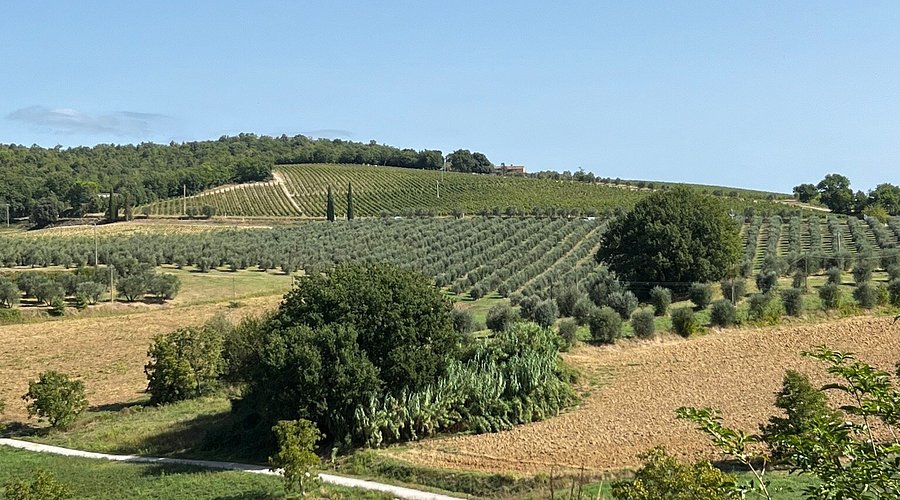
Villa Cafaggio encompasses 60 hectares which includes 30 planted as vineyards, 3 as olive groves and the remaining left as forest. Positioned in the hamlet of Greve in Chianti (Panzano), the property is situated on the western edge of the gently ridged Conca d’Oro which is well known for producing some of the appellations finest wines. The Conca d’Ora’s soils are a mix of rocky galestro limestone (an olive green type of limestone unique to Chianti) and calcareous sandstone with a “scaly clay” texture and plasticity.
The Farkas family first bought the property in the 1860s as a farm property and was replanted and the winery renovated in 1967 by Stefano Farkas, heir to the estate. The typical house style has always embraced some level of modernism, but never over the top or with excessive toast levels in its use of French oak, and has always leaned toward balanced, elegant wines. From 2005 to 2015, Villa Cafaggio was managed by the La-Vis Group, and then was bought by Istituto Atesino di Sviluppo S.p.A. in 2016.
Today Cafaggio (now known as Basilica Cafaggio) produces four “Chianti Classico”: Basilica Solatìo Chianti Classico Riserva, Basilica San Martino Chianti Classico Riserva, as well as a Chianti Classico Riserva and a Chianti Classico. They also produce two Cru bottlings: Basilica del Cortaccio, which is 100% Cabernet Sauvignon and Basilica del Pruneto, which is 100% Merlot.
Cafaggio only produces their Chianti Classico Riserva in the best vintages. The 2006 was crafted from 100% estate grown, hand harvested Sangiovese that was gently pressed using only gravity to move the must within the winery. It is fermented with indigenous yeast (spontaneous fermentation) and after was complete, the 2006 was aged for 18 months in barrique. In more recent vintages the wine has been moved to entirely being aged in Slavonian casks, which has returned it to a more classical, traditional Chianti Classico expression. I find the Riserva a big step up in quality compared to their Chianti Classico bottling.