Famiglia Cecchi Wineries – Impressions with Select Reviews
The Cecchi Family has a history dating back to 1893, when Luigi Cecchi became a professional wine taster. He was early in his understanding of the potential Italian wines held in the world. Today the Cecchi Family is one of the prominent winemaking families in Tuscany, owing it reputation to the families’ historic wines in the Chianti Classico DOCG. Since the 1980s its growth has been impressive and fast paced and they now have five estates, four of which are in Tuscany and one in Umbria. The bulk of the wines they produce are appellation labeled wines:
- Chianti Classico where they have their headquarters and oversee 385 hectares of vineyards that produce 8.5 million bottles of wine annually. Located in the Castellina in Chianti portion of Chianti Classico DOCG, where the family winery is located due south of Panzano and west of Radda. Here they operate under numerous brands (labels) and operate an ambitious operation. Two of the finer labels produced here are Villa Cerna and Villa Rosa, both of which are reviewed in this feature. Under these labels their focus is on growing Sangiovese to the highest levels, although they do grow and blend in other varieties like the indigenous Colorino grape, along with international varieties.
- Morellino di Scansano where they have a new winery that produces whites and reds that express Coastal Tuscan grape expressions like Vermentino, Cabernet Sauvignon, Merlot and Cabernet Franc, along with Sangiovese. In this feature I cover some of the wines being produced under the Val delle Rose label, where their focus is on producing premium quality wines.
- Montefalco Sagrantino which is located in the southern portion of Tuscany and is home to the legendary grape Sagrantino, along with a healthy variety of other grapes that include Sangiovese along with international varieties like Cabernet Sauvignon and Merlot.
Villa Cerna
This historical estate is the Cecchi family’s oldest in the Chianti Classico region and is situated at 280 meters elevation. It offers a variety of vineyard exposures as well as a diversity of microclimates and soils, which add to the depth and dimension of the two wines produced here: Chianti Classico Primocolle and Chianti Classico Riserva. The estate has 80 hectares of vines planted with Cabernet Sauvignon, Colorino and Sangiovese. The emphasis at this estate is on elegance and sophistication in their wines.
Villa Rosa
Villa Rosa in Castellina in Chianti and is among the estates with the richest heritage and its vineyards truly resonate with the essence of Chianti Classico. The Cecchi Family purchased the property from the Lucherini Bandini Family who had tended and cared for the land for almost 70 years. In 2015, which was the first vintage this winery released wines, a significant investment was also made in profiling the soils, which consisted of an in-depth analysis of the terrain through the employment of innovative techniques. The debut of both the Ribaldoni and the Gran Selezione was undertaken with the focus on detailing the phenological phases, always keeping the resulting balance in mind. The focus here is on the Gran Selezione, with Ribaldoni being crafted from the estate’s younger vines.

Val Delle Rose
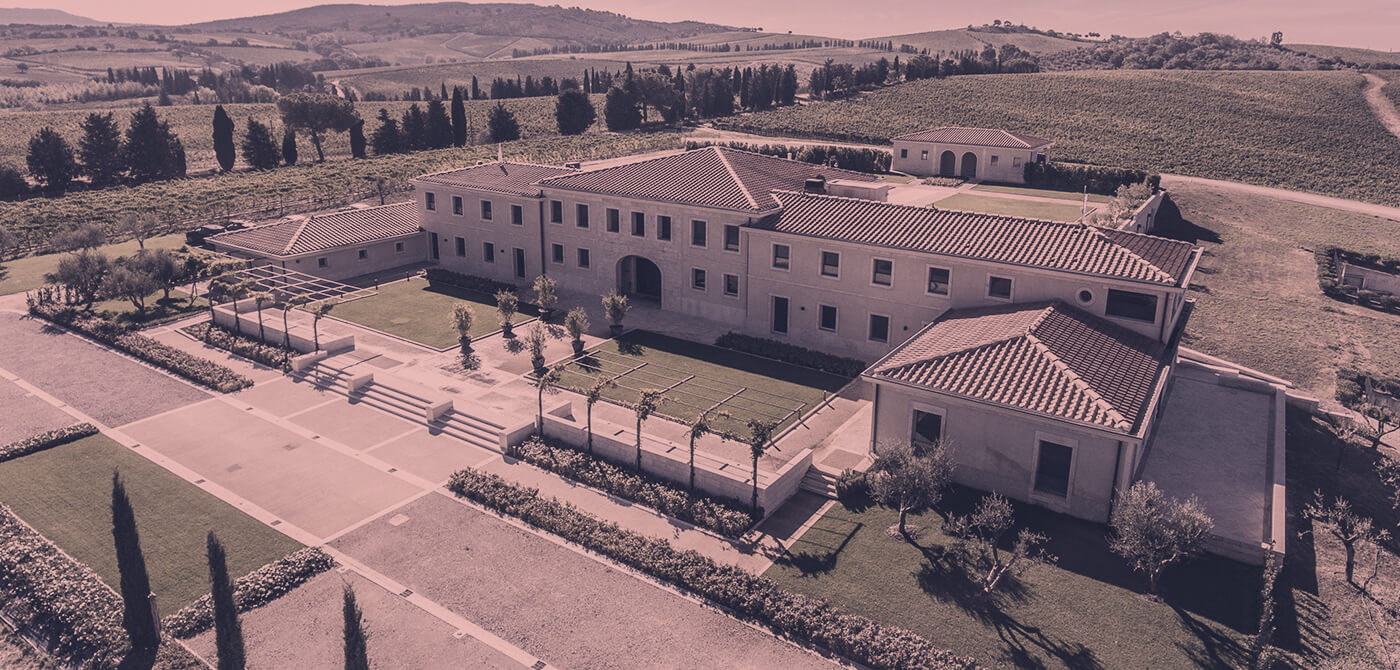
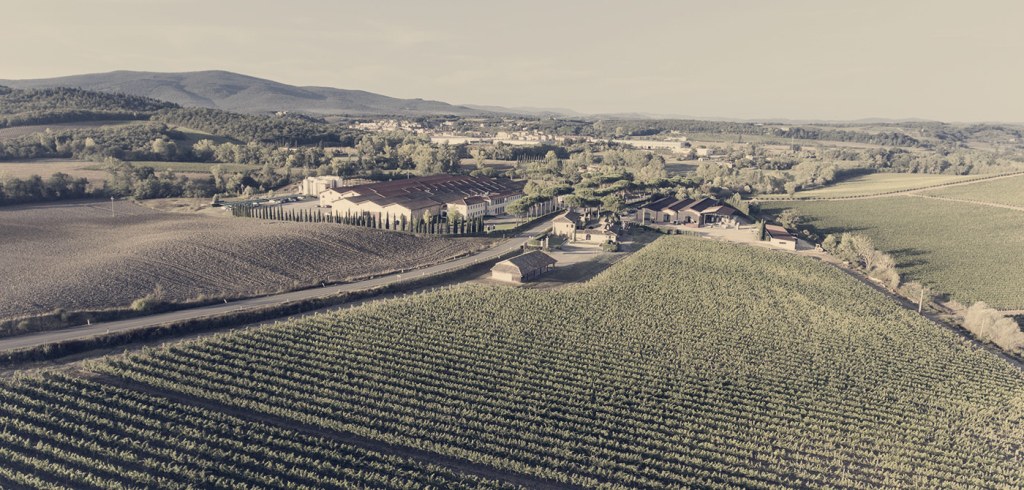
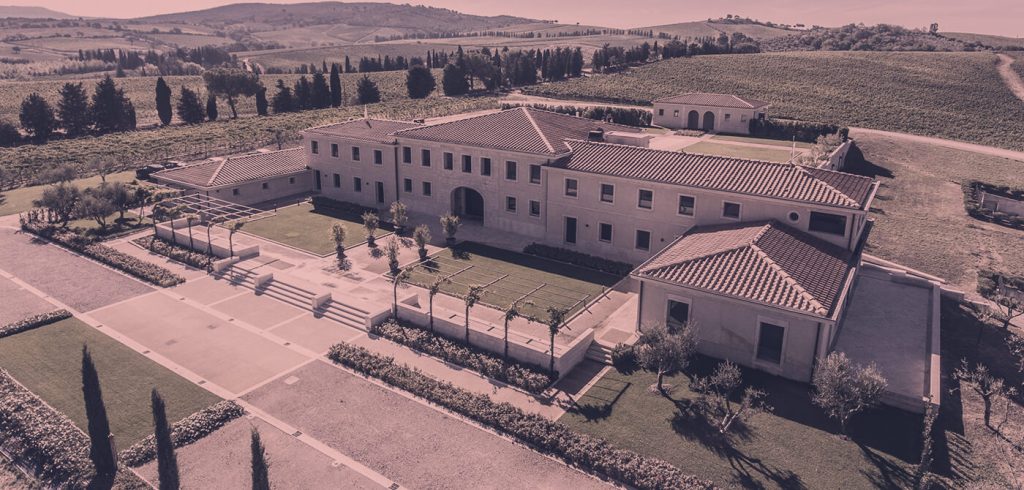
Heralded as one of the most beautiful wineries in Maremma, this is a gem for the historic Cecchi family, where the star variety is Sangiovese. In 1996 the family purchased the existing winery, which lies in the heart of the Morellino di Scansano appellation just a few kilometers southeast of the village of Grosseto. The family has been one of the pioneers of the Maremma region and by tapping into the potential of the region, which is less than 15 kilometers from the Mediterranean Sea, at relatively low elevation. Here the climate is hot and dry. Val Delle Rose is now the largest winery in the appellation, which started as 25 hectares of vineyards, but has grown to over 100 hectares today. The sandy soil, rich in stones, contributes minerality to the whites like Vermentino, along with the soft tannin structure of reds like Sangiovese and Merlot.
The Wines
2016 Villa Cerna, Chianti Classico Riserva (RT93+) This gem reveals a dominant foundation of red cherry and Tuscan scuff with accents of menthol, white flowers, crushed stones and hints of Porcini. This has excellent aging potential, which should lead to the development of lovely tertiary notes, but it will take until age 10, perhaps longer, to reach that stage of evolution. The food friendly palate is well balanced with excellent acidity, and winds up with slightly drying tannins. Drink now – 2036+ Tasted December 2023
Located in the southern portion of Chianti Classico near the village of Castellina Scalo, this property was purchased by the Cecchi family in 1960 and fully restored. This relatively large production bottling, with roughly 20,000 bottles crafted, is only crafted in the best vintages where a careful selection of grapes is made and is a blend 95% Sangiovese and 5% Colorino. The vineyard soils are Middle Dough alkaline with stones. It is aged for 14 months in a combination of barriques and medium sized casks, most of which are used, followed by 10 months in bottle prior to release to the market.
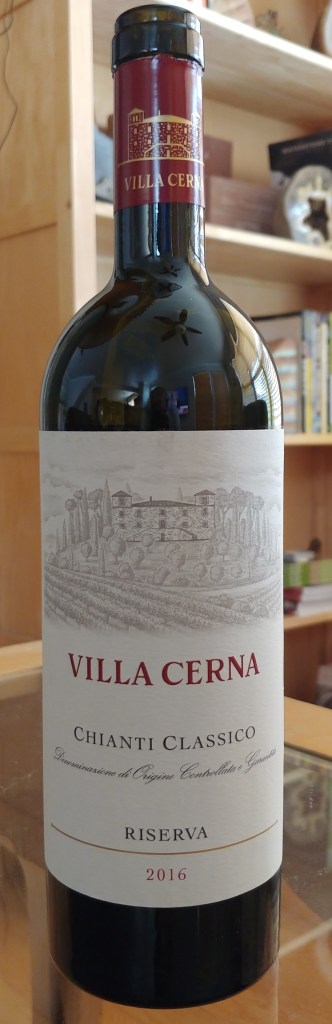
2018 Villa Cerna, Chianti Classico Riserva (RT92+) The 2018 Villa Cerna CCR is a lovely wine from a somewhat challenging vintage. A traditional expression of the region, using a blend of 95% Sangiovese and 5% Colorino, it shows great terroir-induced character as notes of bright red cherry, dried cranberries, scruffy underbrush, and notes of spicey herbs dominate the bouquet. The palate is well balanced, the acidity punctuates the mouthfeel and maintains its firm freshness, the tannins relatively soft. This is a lovely wine and another excellent bottling from this terrific producer. Drink now-2030+ Tasted December 2023
Located in the southern portion of Chianti Classico near the village of Castellina Scalo, this property was purchased by the Cecchi family in 1960 and fully restored. This relatively large production bottling, with roughly 20,000 bottles crafted, is only crafted in the best vintages where a careful selection of grapes is made and is a blend 95% Sangiovese and 5% Colorino. The vineyard soils are Middle Dough alkaline with stones. It is aged for 14 months in a combination of barriques and medium sized casks, most of which are used, followed by 10 months in bottle prior to release to the market.
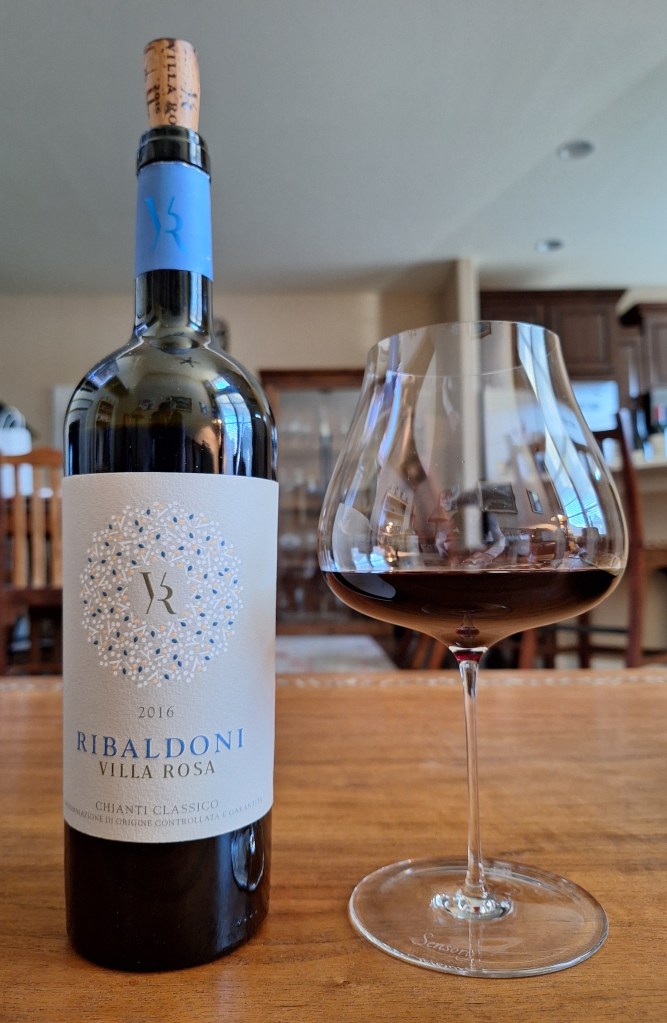
2016 Villa Rosa, Chianti Classico DOCG, Ribaldoni (RT93) This Chianti Classico, from the benchmark 2016 vintage, is an elegant, finely focused that steers clear of any rusticity. Showing enormous terroir-driven character with notes of dark red cherry, dried dusty florals, Tuscan spice and defining minerality. Beautifully balanced and delivering and elegant mid-weight palate the acidity is perfectly dosed and the fine-grained tannins meld into the wine wonderfully. At age 8 this is now in the early stages of its optimal drinking window and should drink well for at least another 10-12 years. If you’re a fan of more finesse and precision, and less bulkiness, this is a wine to seek out! Drink now-2038 Tasted October 2024
Villa Rosa produces 13,000 bottles of Ribaldoni. The grapes are grown at approximately 300 meters in vineyards that cover 30 hectares, along with 15 hectares of olive groves. The soils are calcareous clay of alberese limestone with marl shale. Ribaldoni is made from the estate’s youngest vines which are planted with the spurred cordon method. The wine is vinified with traditional temperature-controlled on-skin fermentation and then macerated for 15 days. Oak ageing is for 12 months in used tonneaux followed by 6 months in bottle prior to release into the market.
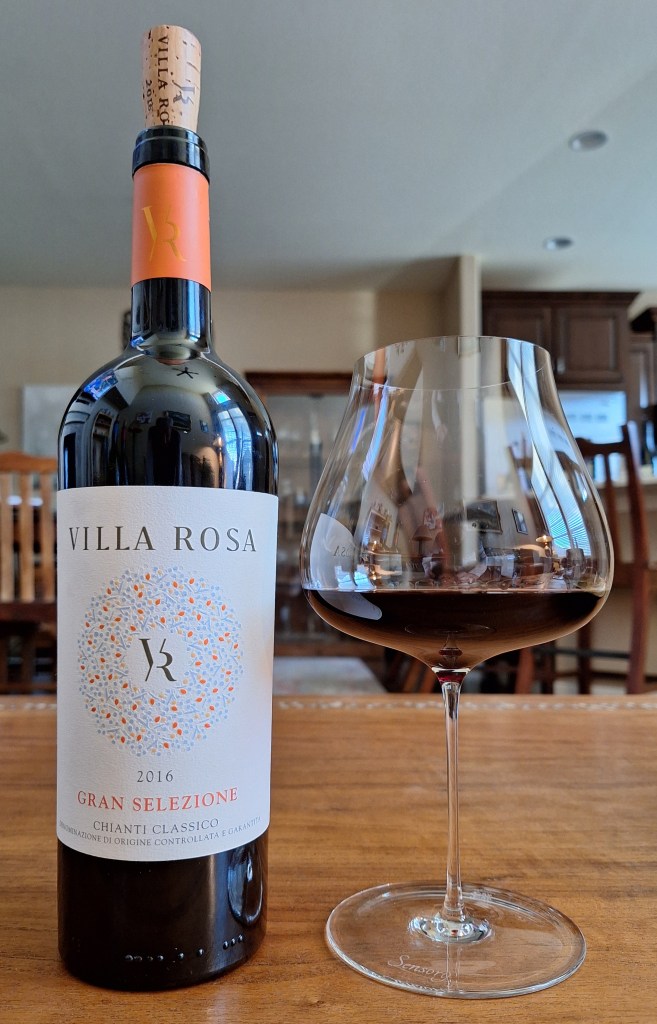
2016 Villa Rosa, Chianti Classico Gran Selezione DOCG (RT95) Like its younger brother Ribaldoni, the Gran Selezione, which is the flagship wine and focus of the Villa Rosa winery, is a finesse-driven red that takes things to the next level of precision and articulation. Sophisticated notes of Marasca cherry liqueur, hints of succulent Ariel plum, soaring balsam sap, earth-dusted spice and a dry day in the fields of Tuscany rolling around in scruff come to mind. The 100% Sangiovese in clean, bright and pure on the palate, the fruit articulating the elegance of the grape, buttressed with freshness and a punctuated finish. Quite and outstanding expression of excellence, this is a wine buy and cellar but is drinking superbly today! A “less is more” kind of wine. Drink now-2040 Tasted October 2024
Villa Rosa produces 13,000 bottles of the Grand Selezione. The grapes are grown at approximately 300 meters in vineyards that cover 30 hectares, along with 15 hectares of olive groves. The soils are calcareous clay of alberese limestone with marl shale. Ribaldoni is made from the estate’s youngest vines which are planted with the spurred cordon method. The wine is vinified with traditional temperature-controlled on-skin fermentation and then macerated for 15 days. Oak ageing is for 15 months in used tonneaux followed by 3 months in concrete and finally the wine rests in bottle for a minimum of 1 year prior to release into the market.
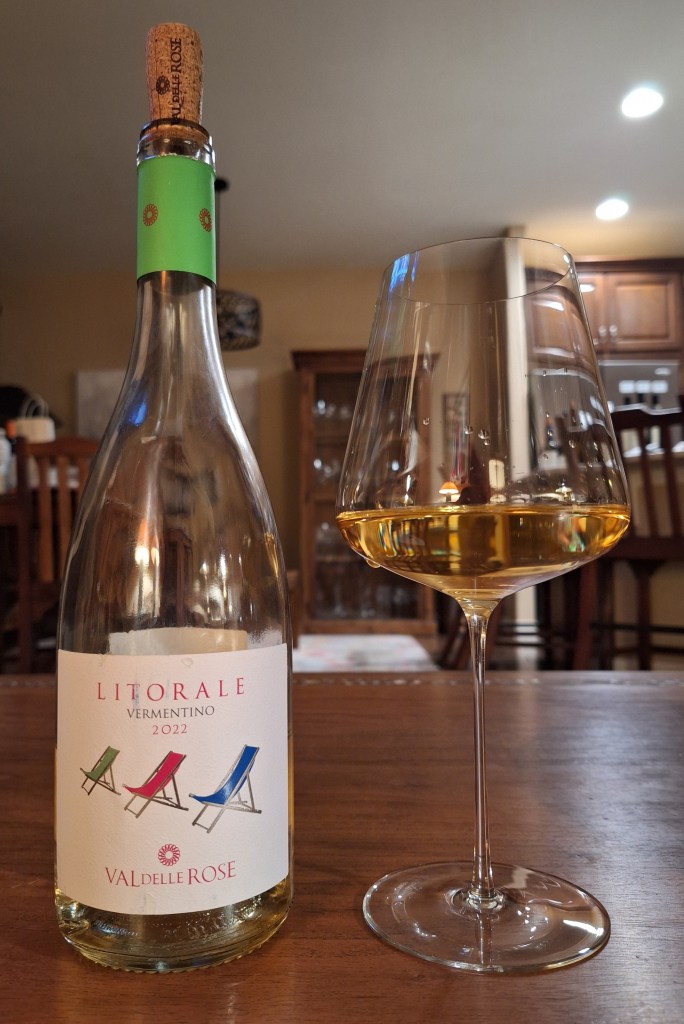
2022 Val Delle Rose, Maremma Toscana, Vermentino, Litorale (RT90) Crafted from Certified Organic grapes, this is a high production warm weather quaffer that’s best served with a slight chill to optimize your drinking pleasure. Like standing on a sandy beach, your toes covered in sand, a briny mist blowing in, this delivers notes of crisp yellow apple, white peach, Meyer lemon zest and sea salt providing a refreshing bouquet. The palate is light and artfully dosed with bright fresh fruit and mouthwatering acidity. This wine delivers a high delicioso factor. Pure, fresh and uplifting, summery smiles abound! Drink now-2028 Tasted October 2024
This is a large production wine with over 60,000 bottles produced and is marketed at a competitive, value price point. Grown in sandstone rich soils with decomposing rock at an elevation of 150 meters, the vineyards are densely planted with 5500 vines per hectare and have guyot trellising. It gets a cold soak followed by temperature controlled cold maceration with a bit of extra time on skins (thus the deeper than normal hue) then, fermentation in stainless tanks takes place once the skins have been removed, followed by 2 months of aging in bottle prior to release to the market.
2016 Val Delle Rose, Maremma Toscana, Aurelio Rosso (RT94) An initial wisp of reduction blows off with a few minutes in the stem as this quickly transforms into a seductive, sensual elixir. Deeply ripe, but well structured, the 2016 Aurelio delivers an abundance of blackberry and black cherry fruit buttressed by damp forest floor, cassis and a pinch of cigar box. With time in the glass the elegance and finesse make a bold statement of authenticity. The palate displays perfectly ripe fruit punctuated with firm structure built with bright acidity hidden behind a wall of elegant fruit, the tannins adding closing notes of structure. Drink now-2030 to catch the lovely fruit, but it will certainly last longer. Tasted October 2024
2016 was the third vintage for this wine, which is produced in relatively large scale with 20,000 bottles made. The vineyard soils are feldspathic quartz sandstone with skeletal sea material. Extended skin contact during a long maceration is followed by temperature controlled fermentation in small stainless steel tanks, followed by aging in mostly used barrique for 12 months, followed by 6 months in bottle prior to release. This wine as born as a tribute to Maremma’s superior quality potential, the name ‘’Aurelio’’ is derived from the name of the beautiful scenic ancient Consular Roman road that winds its way along the coastline of Southern Tuscany, leading from Rome along the coastline to Southern France.
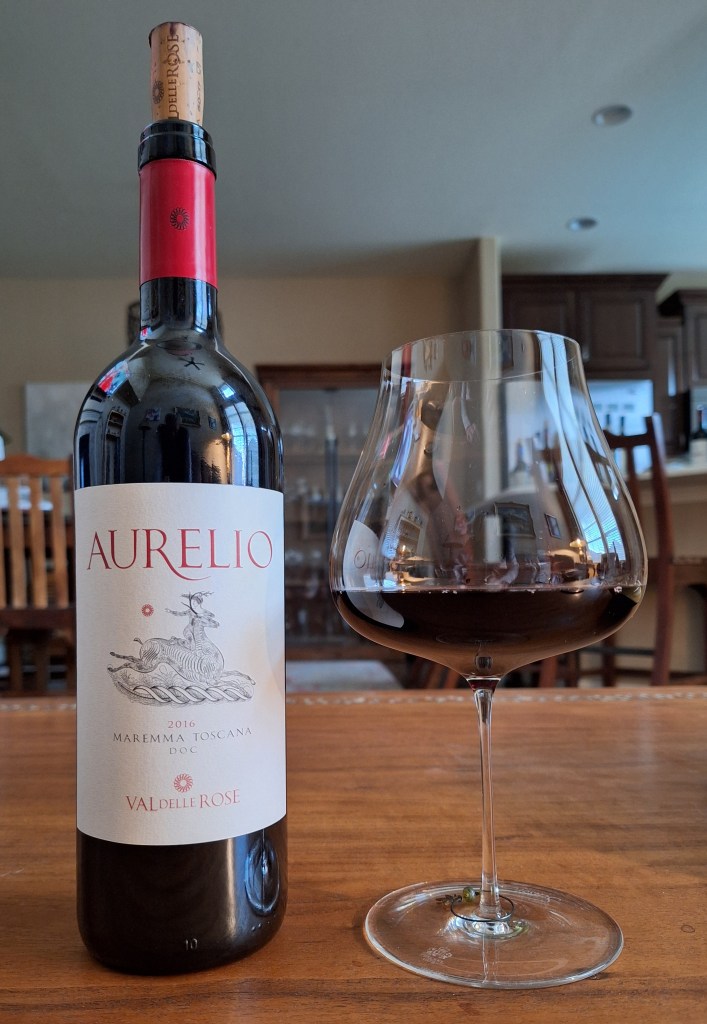
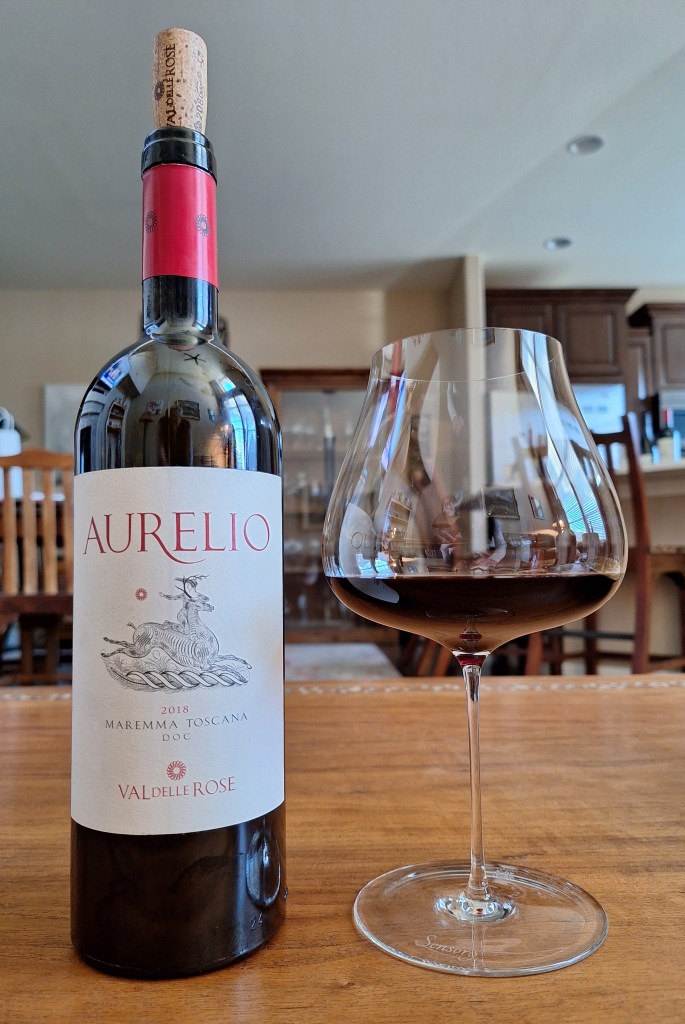
2018 Val Delle Rose, Maremma Toscana, Aurelio Rosso (RT93) This is a blend of 95% Merlot and 5% Cabernet Franc and shows a purple-tinged ruby hue. Wafting up deep and thunderous bass notes of blackberry liqueur, sweet sugar plums medium roast coffee beans, eucalyptus, and a hint of brown tobacco, the palate is decadently ripe and rich, layered with ripe merlot fruit, soft acidity and a succulent, suave finish. Very well balanced and hot climate, ripe fruit create an attractive Tuscan merlot. If you’re a fan of bold richly fruited reds this is a recommended wine. Drink now-2033 Tasted October 2024
2018 was the fifth vintage for this wine, which is produced in relatively large scale with 20,000 bottles made. The vineyard soils are feldspathic quartz sandstone with skeletal sea material. Extended skin contact during a long maceration is followed by temperature controlled fermentation in small stainless steel tanks, followed by aging in mostly used barrique for 12 months, followed by 6 months in bottle prior to release. This wine as born as a tribute to Maremma’s superior quality potential, the name ‘’Aurelio’’ is derived from the name of the beautiful scenic ancient Consular Roman road that winds its way along the coastline of Southern Tuscany, leading from Rome along the coastline to Southern France.